September 23, 2026
The Pharos™ Optical Probe Series combines low-loss optical coupling, patented fiducial technology, customizable probe configurations, and automated calibration to help engineers build more consistent optical test workflows.
September 23, 2026
The Pharos™ Optical Probe Series combines low-loss optical coupling, patented fiducial technology, customizable probe configurations, and automated calibration to help engineers build more consistent optical test workflows.
Artificial intelligence, high-performance computing, and next-generation data centers are pushing bandwidth requirements higher than ever. As a result, silicon photonics (SiPh) is playing a growing role in optical transceivers, photonic integrated circuits (PICs), and emerging co-packaged optics (CPO) architectures.
But as photonic devices become more sophisticated, testing them gets more difficult. Engineers need to accurately position optical probes, achieve efficient optical coupling, and generate measurement data they can trust. Whether they’re characterizing a new device in the lab or preparing a design for production, they need to know they can repeat the measurement and get consistent results.
The FormFactor Pharos™ Optical Probe Series is designed to address these challenges. With solutions for both edge-coupling and surface-coupling applications, Pharos combines advanced micro-optics, patented alignment technology, and automated calibration to simplify optical testing and deliver consistent, repeatable measurements.
Why Is Co-Packaged Optics Testing So Challenging?
Co-packaged optics is emerging as an important technology for addressing the bandwidth and power demands of AI and high-performance computing.
By moving optical connectivity closer to compute devices, CPO architectures can reduce the distance electrical signals must travel and provide a path toward higher-bandwidth, more power-efficient systems. But bringing optics and electronics closer together also creates new test challenges.
Reliable characterization depends on consistently coupling light into and out of increasingly complex photonic devices. Even small changes in probe position or alignment can affect coupling efficiency and influence the measurement itself.
For engineers, the challenge isn’t simply achieving good coupling once. They need to reproduce that performance from test to test, device to device, and operator to operator.
The Pharos Optical Probe Series addresses this challenge through precise optical alignment and low-loss optical coupling. By reducing variability in the test setup, engineers can have greater confidence that changes in their data are coming from the device being tested rather than differences in probe alignment.
Meet the Pharos™ Optical Probe Family
Different photonic devices require different approaches to optical coupling. The Pharos family includes four probe configurations designed to address a range of edge- and surface-coupling applications.
Pharos ECS is designed for narrow and shallow trench applications that require efficient edge coupling and low-loss optical performance.
Pharos ECL provides the additional optical reach needed for V-grooves and die-level testing applications while supporting precise edge coupling.
Designed for grating couplers and vertically emitting devices, Pharos SCS supports surface-coupling measurements where accurate positioning and repeatability are critical.
Pharos SCL is engineered for beam expanders and co-packaged optics interfaces, supporting advanced photonic devices and emerging optical packaging architectures.
Together, these four configurations cover a wide range of silicon photonics applications, including edge-coupled waveguides, optical transceivers, PICs, grating couplers, and co-packaged optics interfaces.
Consistent Optical Data Starts with Precise Alignment
Alignment is one of the most important variables in optical testing, particularly when working with edge-coupled devices. Even small positioning differences can change coupling efficiency and affect measurement results.
Manual alignment can also take time and depend heavily on operator experience. That may be manageable during early device development, but it becomes a bigger challenge as testing expands to more devices and higher-volume environments.
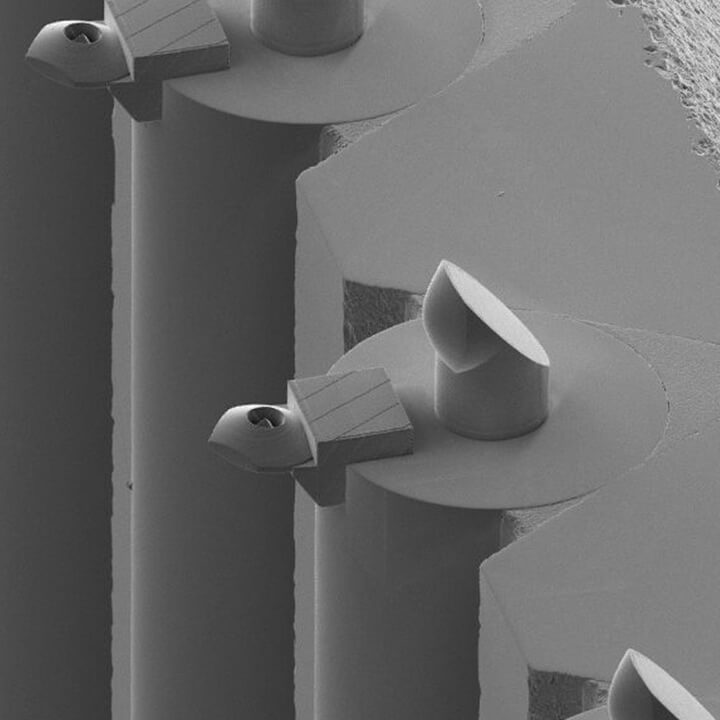
FormFactor addresses this challenge with patented optical fiducial technology integrated directly into the Pharos fiber array unit. The fiducial provides a reference for fast, accurate probe positioning with minimal user interaction.
For engineers working with edge-coupled devices, this can simplify setup and reduce the manual adjustments needed to establish optical alignment. Just as important, it helps engineers repeat that alignment from one measurement to the next.
That consistency makes it easier to compare measurements across devices, wafers, test runs, and operators. Engineers can spend less time questioning the test setup and more time understanding what the data says about the device.
Engineering the Probe for Repeatability
Repeatable measurements depend on more than accurate positioning at the device. The characteristics of the optical probe itself also matter.
Pharos optical probes undergo active inspection and measurement of critical optical parameters, including channel pitch, angular deviations, and mode field diameters. This helps control the characteristics that can influence optical coupling and measurement consistency.
The probes can also be customized around the requirements of the device under test. Configurable parameters include:
This flexibility allows engineers to better match the optical interface to the application instead of trying to make every device work with the same probing configuration.
That becomes especially useful as new PICs and optical interfaces are developed. Silicon photonics architectures continue to change, and test hardware needs to accommodate new device geometries and coupling approaches while still producing repeatable measurements.
Automating Optical Probe Alignment and Calibration
As the number of devices being tested increases, repeatedly aligning optical probes by hand can quickly become time-consuming.
Manual alignment can also introduce differences from one operator or test run to another. Automating more of the process helps create a more consistent workflow and reduces the amount of hands-on setup required.
Pharos optical probes integrate with FormFactor’s SiPh-Tools 4.0 software, including its AutoCal functionality for automated calibration and alignment.
Reducing manual adjustments can streamline setup and help maintain consistent measurements across repeated tests. That’s particularly valuable when engineers need to characterize multiple devices or compare data across a larger test population.
The less time engineers spend rebuilding and realigning the optical setup, the more time they can spend analyzing device performance.
From Silicon Photonics Development to Co-Packaged Optics
Optical test requirements can change significantly as a device moves through development. A research team characterizing a new photonic design may need flexibility and precise control over the optical interface. Later, as the design moves closer to manufacturing, engineers may need to repeat those measurements across many more devices. Co-packaged optics adds another challenge as optical interfaces become more tightly integrated with advanced electronic packaging.
In each case, reliable measurement data starts with a stable and repeatable optical connection to the device.
With configurations for both edge- and surface-coupled devices, the Pharos family gives engineers options for addressing these different test requirements. Precise alignment, customizable optical parameters, and automated calibration can help teams move from early device characterization toward more repeatable silicon photonics testing.
Building More Repeatable Silicon Photonics Test Workflows
As AI, high-performance computing, and data center applications continue to drive silicon photonics development, optical testing has to keep pace.
The challenge isn’t simply getting light into and out of a photonic device. Engineers need to do it accurately and repeatedly, without wondering whether changes in the results are coming from the device or the test setup.
The Pharos™ Optical Probe Series combines low-loss optical coupling, patented fiducial technology, customizable probe configurations, and automated calibration to help engineers build more consistent optical test workflows.
From edge-coupled waveguides and grating couplers to PICs and emerging co-packaged optics interfaces, Pharos helps engineers generate repeatable measurement data so they can better understand device performance and make informed decisions about what comes next.
FAQs – Optical Probing for Silicon Photonics
What is an optical probe used for in silicon photonics testing?
An optical probe provides the optical connection needed to couple light into or out of a photonic device during characterization and testing. Precise probe positioning and coupling are important because even small alignment variations can affect optical measurements.
What is the difference between edge coupling and surface coupling?
Edge coupling transfers light through an optical interface at the edge of a photonic device. Surface coupling typically uses structures such as grating couplers to couple light through the device surface. Each approach requires different probe geometries and alignment techniques.
Why is repeatability important in silicon photonics testing?
Repeatable measurements allow engineers to confidently compare results across devices, wafers, test runs, and operators. Reducing variability caused by probe alignment also makes it easier to determine whether differences in the data are coming from the device itself.
How does the Pharos Optical Probe Series improve alignment repeatability?
Pharos uses FormFactor’s patented optical fiducial technology integrated into the fiber array unit. The fiducial provides a reference for accurate probe positioning, helping reduce manual alignment effort and variability between measurements.
Which Pharos probe is designed for co-packaged optics testing?
Pharos SCL is designed for surface-coupling applications including beam expanders and co-packaged optics interfaces. Other Pharos configurations support additional edge- and surface-coupling requirements.
Can Pharos optical probes be customized for different photonic devices?
Yes. Pharos probes can be configured for device-specific requirements including fiber configuration, channel pitch, wavelength, mode field diameter, and emission angle.
Can optical probe alignment be automated?
Yes. Pharos integrates with FormFactor’s SiPh-Tools 4.0 software and its AutoCal functionality to support automated calibration and alignment. This reduces manual setup and helps improve consistency across repeated measurements.